PEPTIDES · SLEEP
Delta Sleep-Inducing Peptide (DSIP): A Tool for Deep Sleep and Stress Recovery
A naturally occurring neuropeptide first isolated in the 1970s, DSIP is finding a renewed role in protocols for stubborn insomnia, chronic stress, and pain.
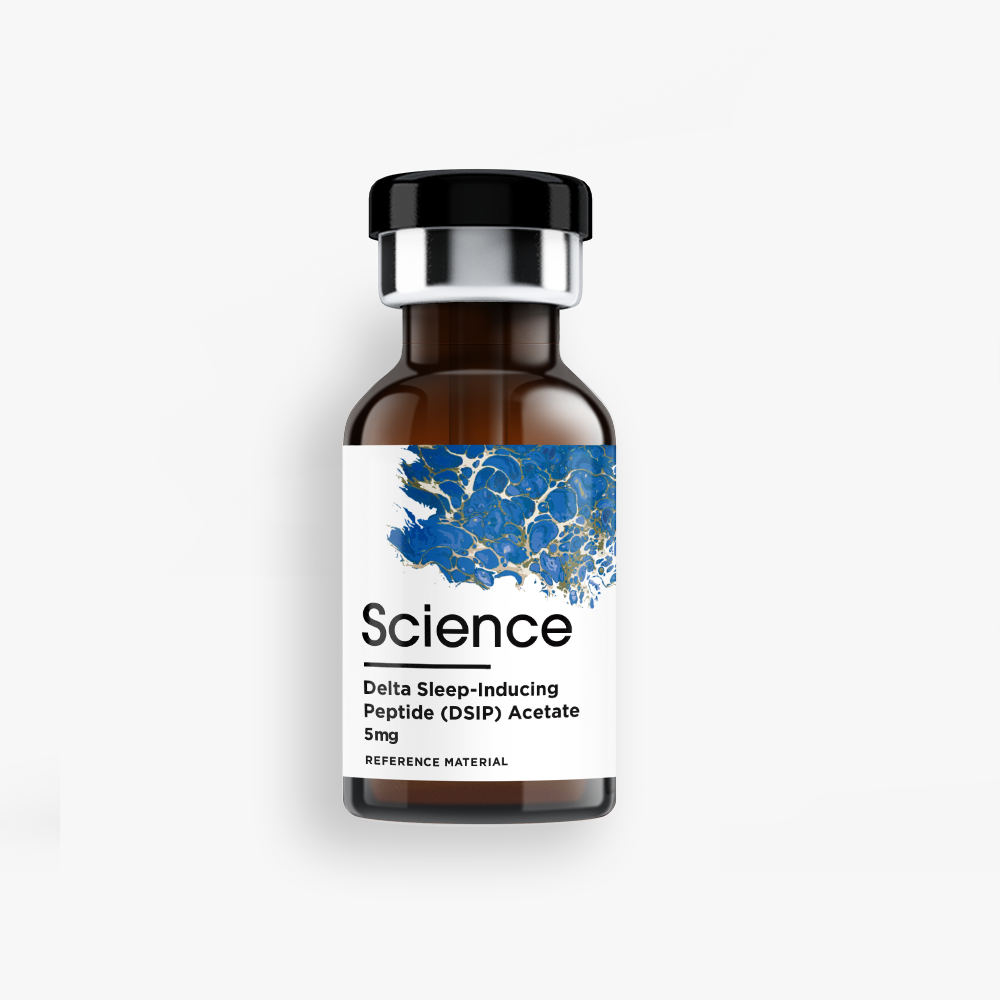
What is DSIP?
Delta Sleep-Inducing Peptide is a short nine-amino-acid neuropeptide first identified in rabbit brain tissue in 1977. It received its name because intravenous infusion produced a dramatic increase in delta-wave (deep, non-REM) sleep. Unlike sedative-hypnotic drugs, DSIP does not knock the brain unconscious — it appears to modulate endogenous sleep architecture, particularly the slow-wave stages responsible for physical repair and hormonal regulation.
How it works
DSIP crosses the blood-brain barrier and interacts with several neurotransmitter systems involved in sleep, stress, and pain. The exact receptor target is still debated, but the downstream effects are reproducible: lower cortisol amplitude, slower brain activity in slow-wave sleep, and a measurable shift in the body’s response to physical and psychological stressors. It does not appear to suppress REM sleep or produce next-day grogginess.
Documented effects
- Deeper sleep: Increased delta-wave duration, the phase associated with growth-hormone pulse, glymphatic clearance, and tissue repair.
- Lower cortisol: A blunted stress-hormone response in subjects under chronic stress.
- Mild analgesia: Studies suggest pain tolerance improves, particularly in chronic-pain conditions.
- Hormonal modulation: Influence on growth hormone, luteinizing hormone, and melatonin signaling.
Who is it for?
DSIP is most useful for patients whose sleep architecture is the problem rather than sleep onset — those who fall asleep without difficulty but never feel rested. It is also a candidate for night-shift workers, frequent travelers crossing multiple time zones, and athletes in heavy training blocks where recovery is the limiting factor. We sometimes use it alongside melatonin and magnesium for layered support.
What to expect
DSIP is administered by subcutaneous injection in the evening, typically in cycles of four to eight weeks. Most users report deeper sleep within the first week, with subjective gains in morning energy and lower afternoon stress reactivity emerging in the second and third weeks. We always combine it with the basics: dark room, consistent schedule, cool temperature, and no late caffeine.
Safety considerations
DSIP has a clean safety profile in clinical literature spanning decades, but as with any peptide it should be sourced from a reputable compounding pharmacy and prescribed and supervised by a clinician. We screen for sleep apnea, thyroid dysfunction, and depression before starting, because treating those is more important than adding a peptide on top.